
Full rust removal, structural repair, re-fabrication, and refinishing for deteriorated and historic fire escapes. We work with co-ops, apartment buildings, and commercial properties across Westchester.
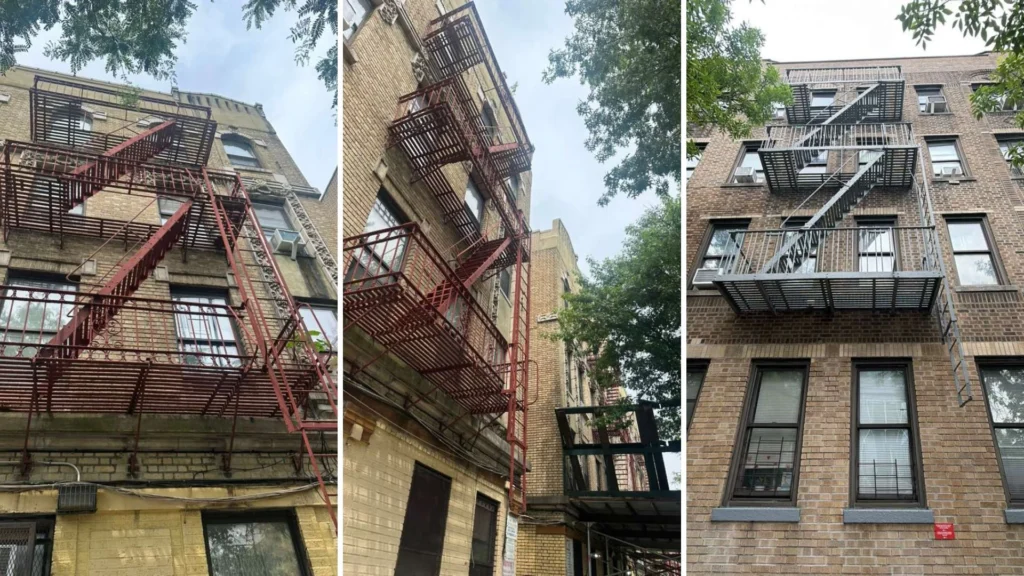
A fire escape doesn’t reach this condition overnight. It’s decades of surface rust, several rounds of paint layered over old failures, and the occasional wrong-metal repair patched in along the way. Restoration is what actually resolves that history, instead of covering it up again.
In Westchester County, the governing standard is the Multiple Residence Law and the Property Maintenance Code of New York State, not New York City’s building code. We restore fire escapes to that Westchester standard across the county, including in the pre-war and historic-district buildings where the work matters most.
Under the Multiple Residence Law, the maintenance obligation sits with the building owner, not the tenant or shareholder. That’s the fact boards and managing agents most often need documented, and it’s built into how we report our work.
Each of these three services solves a different problem. Knowing which one your building needs keeps you from paying for the wrong scope.
Repainting is preventive maintenance, recoating a sound structure on a schedule before rust has a chance to start.
Repair addresses specific defects: a corroded stringer, a cracked weld, a loose railing. The structure around the defect is otherwise in decent shape.
Restoration is a full renewal. It's the right call when deterioration has spread across the entire structure, or when a historic fire escape needs its original character preserved rather than patched with generic parts.
The extent of the deterioration is usually what decides it. A free assessment will tell you honestly whether you need a targeted repair or a full restoration. A smaller job done right serves you better than an oversized one, and we’ll say so either way.
These are the most common conditions that indicate a fire escape has moved beyond routine repairs and requires comprehensive restoration.
When nobody can trace the coating history back to its start, that buildup has become part of the problem.
Corrosion spread across most of the structure is a restoration case. Corrosion isolated to one section is a repair case.
Years of piecemeal repairs often leave a fire escape with parts that don't match, or sections that were never properly replaced. Bringing the whole structure back into alignment at once is usually the more efficient path.
If your board is already scoping a larger capital project, restoring the fire escape within that cycle tends to cost less over time than a string of repairs in between.
If any of these sound like your building, a full assessment will confirm the scope before you commit to a plan.
Westchester’s pre-war building stock, particularly in historic districts like Tarrytown and Sleepy Hollow, often carries ornamental ironwork worth preserving rather than replacing with generic steel. When we re-fabricate missing pieces, we match the original period detail instead of installing something that doesn’t belong on the building.
Pre-1978 buildings frequently carry old lead-based coatings. Removing them requires EPA-compliant lead-safe work practices: proper encapsulation and containment, not a quick strip job.
If your building sits within a historic district, exterior work, including fire escape restoration, may require a Certificate of Appropriateness from the local historic preservation commission before work begins. That approval is the commission’s call, not ours. We can tell you whether your building likely needs it and help prepare what the commission typically wants to see.
Every restoration follows a documented sequence to ensure the structure is repaired, protected, and refinished to a consistent standard from start to finish.
A full restoration takes longer than a single repair because it addresses the whole structure at once, and we can schedule it around an occupied building without asking anyone to leave.
Section 304.9 of the Property Maintenance Code of New York State requires fire escapes to be kept in good repair and structurally sound, with exposed metal protected from rust by periodic application of weather-coating materials, such as paint. Restoration brings a neglected fire escape fully into that standard, rather than addressing only the condition named in a violation notice.
Every Westchester municipality, including Yonkers, New Rochelle, Mount Vernon, and White Plains, enforces this code through its own building department and fire marshal. New York City’s Department of Buildings has no jurisdiction here. We document each completed restoration in a form your board or managing agent can keep on file for exactly this reason.
We’re licensed and insured to work throughout Westchester County, carrying general liability and workers’ compensation coverage. A certificate of insurance is ready before any capital project begins, boards ask for this before approving work, and we have it on hand.
Our crews include AWS-certified welders working under OSHA safety practices, and we hold EPA Lead-Safe (RRP) certification for pre-1978 coating removal. We’ve restored fire escapes across Westchester for 22 years, including historic and pre-war buildings in the Rivertowns and along the Sound Shore, with before-and-after documentation from real projects, not stock photography.
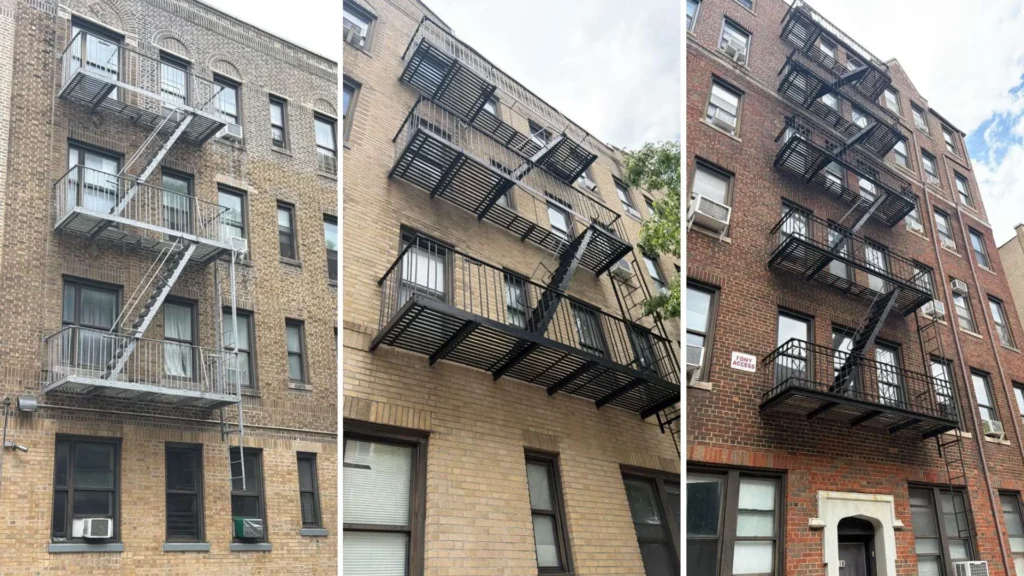
A patched-up iron fire escape ends up costing more money over time than doing a full restoration once.
Call us at (914) 266-1401 or request a free estimate. We will inspect your building, tell you honestly if you need a quick repair or a complete overhaul, and explain every step of the process.
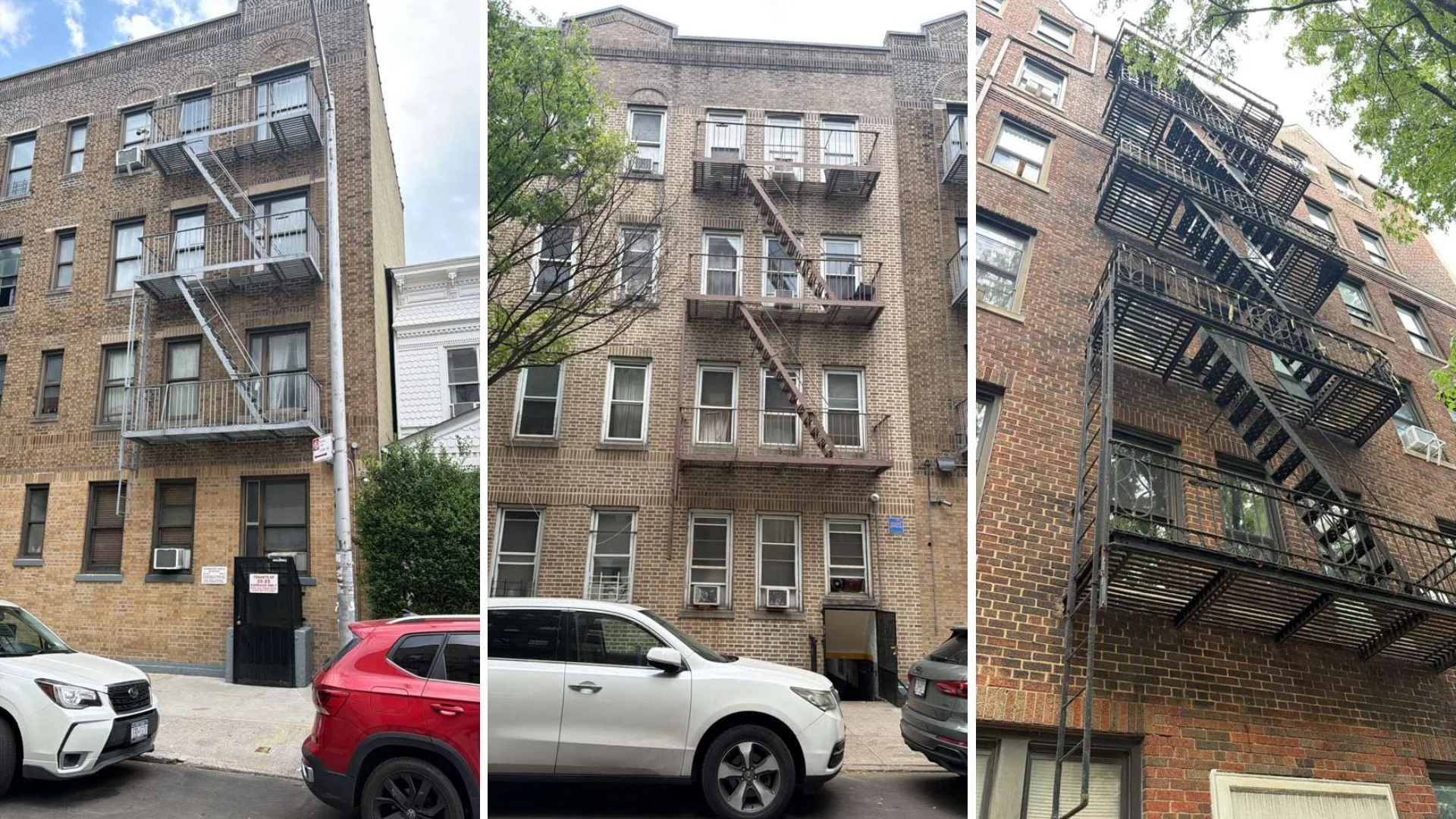
In most cases, yes, provided enough sound steel remains to carry the structure's load. Even heavy surface rust and failing multi layer paint can be stripped and repaired. A full assessment will tell you whether restoration or replacement is the better call.
If the inspection shows structural degradation is too severe for safe load bearing repairs, we do not force a restoration contract. We provide an honest structural breakdown, explain why full replacement is necessary, and outline the proper steps for compliant installation.
Cost depends on the extent of deterioration, how much steel needs replacing, and whether historic re fabrication or lead safe removal is involved. We provide a firm estimate after a full assessment.
Yes. We work directly with your managing agent to draft and distribute clear notice letters to residents and shareholders well in advance. These notices outline exact work dates, window access requirements, and safety protocols to ensure minimal resident disruption.
Yes. For buildings managing capital improvement funds across multiple fiscal years, we can break the restoration scope into distinct, code compliant phases, prioritizing structural safety on upper landings first, followed by surface refinishing in the next cycle.
Repair fixes specific defects on an otherwise sound structure. Restoration renews the entire structure when deterioration is widespread, or when a historic fire escape needs its original character preserved.
Yes. We work with original ironwork and period detail when re fabricating missing pieces, and we follow lead safe practices on pre 1978 coatings. Historic district approval, when required, comes from your local preservation commission.
We match historic and pre war ironwork by inspecting surviving original balusters, brackets, and cornices on your building or neighboring period properties. We then custom forge or cast replacement pieces to replicate the exact dimensions, weight, and profile of the original iron rather than using mismatched catalog components.
Upon finishing the project, we provide a complete project package for your board or management office containing photo documentation of conditions, certificates of insurance, written warranties, AWS welding inspection records, and compliance paperwork ready for municipal review or insurance audits.
It depends on the extent of the work. Restoring an entire structure takes longer than a single repair, and we will give you a specific timeline as part of your assessment based on your building's actual condition.