
Specialized fire escape painting for waterfront and near-water buildings, salt-air corrosion protection, corrosion-resistant coatings, and a recoat schedule built for the Sound Shore and Hudson, across Westchester.
If your fire escape is rusting through paint that’s barely a few years old, and a building a mile inland doesn’t have the same problem, the difference isn’t the paint job. It’s the air. We paint fire escapes on the Sound Shore and along the Hudson throughout Westchester County, and we prep and coat every waterfront job differently than a standard inland fire escape, because the environment genuinely calls for it.
Salt doesn’t just sit there quietly. Along the Long Island Sound, in New Rochelle, Mamaroneck, Larchmont, Rye, and Port Chester, wind picks up fine salt particles off the water and carries them right onto exposed steel. Those chlorides work into every seam and joint in the metal, and oxidation speeds up well past whatever plain humidity would do on its own. This isn’t a sales pitch, it’s just what saltwater exposure does to steel.
The Hudson’s a different animal, and it’s worth being straight about that instead of grouping it in with the Sound like everyone else does. At Westchester’s stretch of the river, the water’s brackish, not full ocean salt, and how salty it gets shifts with the tide and the season.
Buildings in Yonkers, Tarrytown, Peekskill, and the Rivertowns deal with humidity that stays elevated and salt exposure that comes and goes, not a constant coastal blast.
Real corrosion risk either way, just a different cause, moisture cycling more than chlorides landing directly on the metal. Either way, once rust gets started it feeds on itself, which is why a fire escape near the water can go from light surface rust to flaking paint far faster than one ten miles inland.
A standard repaint assumes the coating just needs to look good and shed water. A waterfront job has to survive chemical attack, and that changes almost every step.
Where an inland job might get a wire-brush and scrape, waterfront steel typically needs abrasive blasting to a clean, sound surface, because any rust left under the new coat becomes the starting point for the next failure.
The coating system has to resist chlorides specifically, not just moisture. That's the difference between a job that looks fine for a season and one that actually holds through a few winters of salt exposure.
A Sound Shore fire escape simply won't go as long between paint jobs as one a few miles inland, and pretending otherwise just means a bigger repair bill later.
Near the water, surface rust can progress to section loss faster than most owners expect, so waterfront maintenance is really about staying ahead of that timeline, not just refreshing the finish.
The gap between a coating that lasts and one that fails near salt water almost always comes down to two things: how clean the metal was before paint went on, and whether the primer was actually built to resist chlorides.
We prep waterfront steel down to sound metal, removing old coatings and surface corrosion completely rather than painting over compromised layers. From there, a zinc-rich or rust-inhibitive primer goes down first, the layer that actually does the corrosion-fighting work, followed by a marine-grade or industrial topcoat system in the traditional two-coat approach.
A single coat of standard exterior paint, the kind that holds up fine on an inland building, simply doesn’t have the chemical resistance to survive sustained salt exposure.
It’s not a workmanship failure when that happens, it’s the wrong product for the environment, and the single most common reason we get called out is to redo work someone else did within a year or two of installation.
Corrosion exposure isn’t uniform across Westchester’s waterfront, and we treat each area according to what it actually faces.
New Rochelle, Mamaroneck, Larchmont, Rye, and Port Chester sit directly along the Long Island Sound, with the highest chloride exposure in the county. Buildings closest to the water and facing prevailing onshore winds see the fastest corrosion.
Yonkers, Tarrytown, Peekskill, and the Rivertowns face elevated humidity and periodic brackish exposure rather than full ocean salt air, but the moisture cycling still shortens a coating’s working life compared to buildings further inland.
We paint fire escapes across both, with prep and coating decisions based on the building’s actual exposure, not a one-size-fits-all waterfront package.
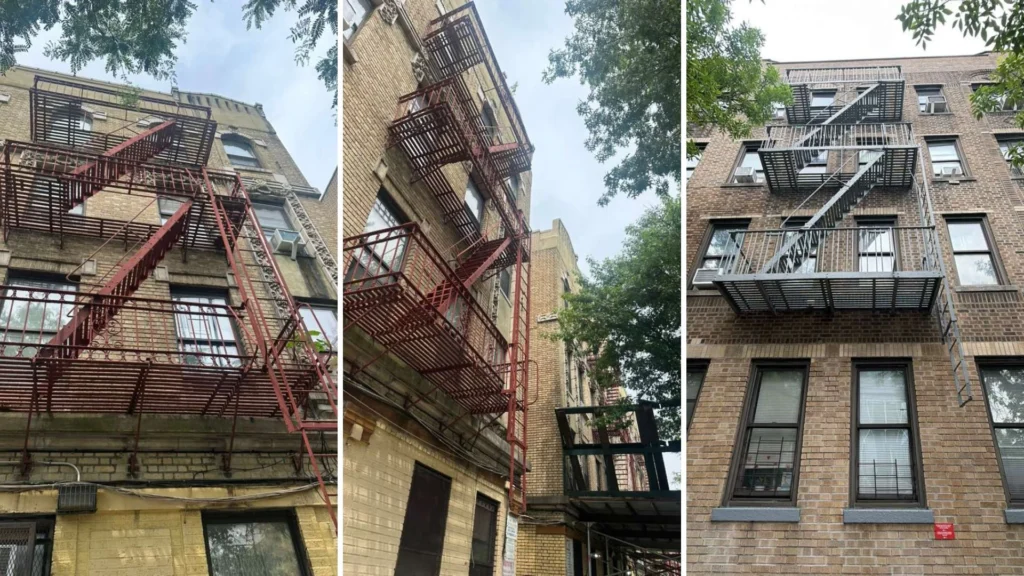
Inland fire escapes in Westchester go longer between paint jobs, plain and simple. Owners who assume their waterfront building runs on the same timeline usually find out the hard way, rust showing up years before they expected it.
A Sound Shore fire escape needs recoating more often than one further from the water. A Hudson-facing building usually lands somewhere in the middle, depending on how exposed it actually is and which way it faces.
The warning signs show up before things get bad. Chalking or fading on the topcoat. Small rust spots poking through the finish. Paint that’s gone thin or started flaking at the edges. Catch any of that early and it’s a lot cheaper than waiting until the damage is obvious.
What actually works is a maintenance plan built around where your building sits, not some generic “repaint every five years” rule that has nothing to do with a Sound-facing structure taking a beating from salt air.
Salt doesn’t wait for a slow process. Here’s how we actually protect steel against it.
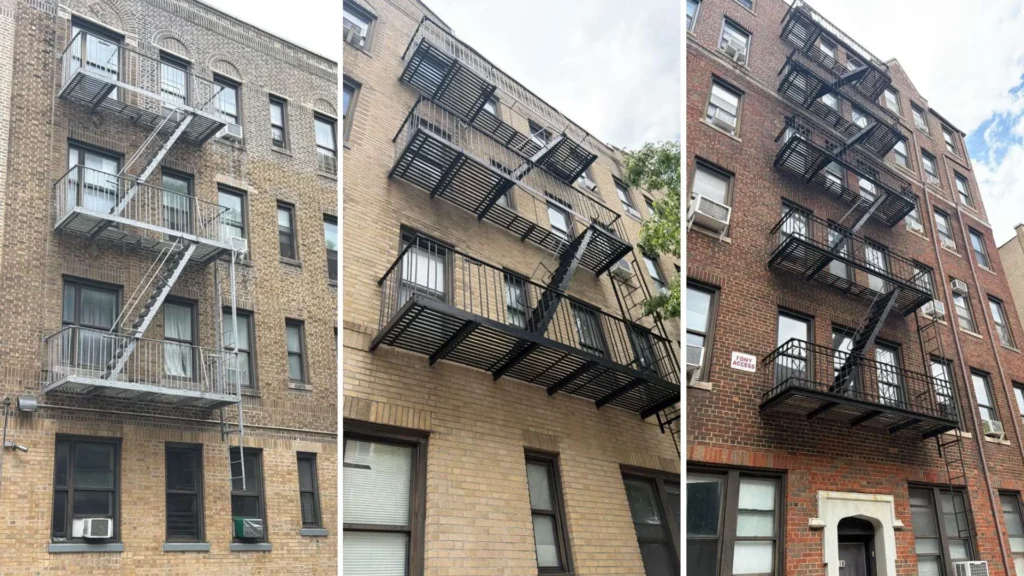
If your coating’s already chalking or you’re seeing rust spots near the water, it’s not going to fix itself. Wait long enough and it stops being a paint job and turns into a repair job.
Contact us at (914) 266-1401 or request a coastal coating assessment.
We’ll look at what your building’s actually dealing with and put together a coating plan built for this environment, not something generic with a waterfront price tag slapped on it.
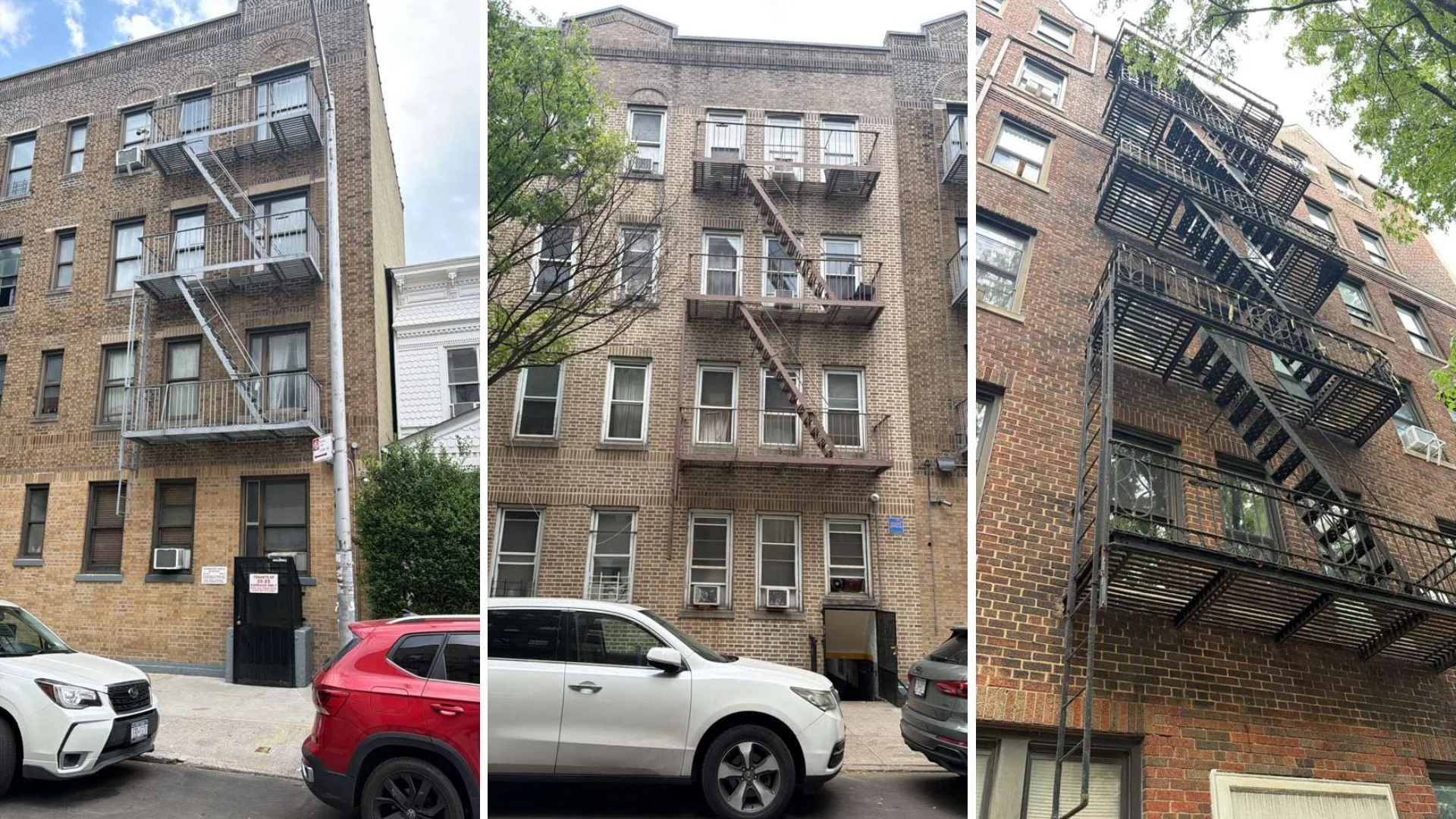
Salt in the air off the Sound lands right on the steel and speeds up rust past what normal weather would do. Along the Hudson it's more about humidity and occasional brackish water than a straight ocean-salt hit, but either way, metal out here corrodes quicker than it would ten miles inland.
Depends where you are. Sound Shore buildings need it more often. Hudson-facing ones usually land somewhere in the middle. Distance from the water and which way the building faces both matter more than people expect.
Zinc-rich or rust-inhibitive primer first, then a marine-grade or industrial topcoat on top, two coats, over metal that's actually been prepped down to bare, sound steel. Skip the prep or use a single coat of regular exterior paint and it won't last a season.
Not permanently, no. Anyone who tells you otherwise near salt water isn't being straight with you. The right prep and coating and staying on schedule with recoats is what actually keeps it from becoming a structural problem down the line.
Yes, both. New Rochelle, Mamaroneck, Larchmont, Rye, Port Chester on the Sound side, Yonkers, Tarrytown, Peekskill, and the Rivertowns along the Hudson. What we actually do depends on how exposed that specific building is.