
Fire Escape Painting Westchester brings Westchester fire escapes into compliance with the Multiple Residence Law and the Property Maintenance Code of New York State. This is the law that actually governs Westchester properties.
If you’ve got a notice on file, or you just want to get ahead of one, we assess the structure, scope the work, and get it signed off.
A code officer checks four things: the structure holds up as a working exit, the metal is free of significant corrosion, nothing obstructs the escape route, and the board or owner is keeping up with maintenance rather than waiting for a problem to surface.
A lot of the boards and owners who call us have already spent time on a page written for New York City, planning around DOB timelines or Local Law 11 cycles that have nothing to do with a Westchester building. We scope against the Westchester standard from the start, so you’re only paying for work your building is actually subject to.
Most Westchester multifamily buildings fall under the Multiple Residence Law. NYC’s Multiple Dwelling Law is generally limited to cities of 325,000 or more people, which puts it out of scope for Westchester in nearly all cases. We confirm the applicable law for your specific building before recommending any work.
The maintenance standard is drawn from the Property Maintenance Code of New York State §304.9, which generally requires the structure to be kept in good repair, properly anchored, and protected from rust through periodic weather coating. The Fire Code of New York State covers egress and life safety on top of that.
Occupancy classification and unit count decide which law applies to a specific building. A true single-family home isn’t a “multiple residence” anywhere. We confirm the classification for your building before we scope anything.
The two systems don’t share a governing law, an enforcement body, or a facade inspection cycle. Here’s where they actually differ.
Category | Westchester | New York City |
Governing law | Multiple Residence Law | Multiple Dwelling Law |
Maintenance standard | Property Maintenance Code of NYS §304.9 | NYC Building Code / Local Law 11 |
Enforced by | Each municipality’s building department and fire marshal | NYC Department of Buildings |
Facade cycle | No FISP style mandated cycle | Local Law 11 (5 year facade cycle) |
Violation body | Local code enforcement office | Environmental Control Board |
If a contractor or a checklist references DOB, Local Law 11, FISP, or the ECB for a Westchester property, that’s the clearest sign they’re scoping your building against the wrong law.
There’s no single countywide agency here. Every city and town runs its own building department and code enforcement office. In some towns, a local fire marshal handles egress and safety alongside code enforcement, or in place of it. Yonkers, New Rochelle, Mount Vernon, and White Plains each enforce the same state framework on their own timeline and paperwork.
The office that follows up after a failed inspection in one city is a different office entirely from the one covering the next town over. If you’re not sure which office covers your building, that’s the first thing we confirm, before we recommend a single repair.
Surface rust caught early? That’s just maintenance. Ignore it long enough and it becomes a violation. Code officers draw the line once corrosion passes what §304.9 considers good repair.
The triggers we see most often:
Once one of these gets flagged, the local building department typically issues a notice of violation or a correction order with its own timeline. That timeline varies by municipality, so we confirm the specifics for your building.
We inspect first. If a correction order’s already on file, we scope the repair tightly to its deadline. If nothing’s filed yet, you’ll know whether it’s a simple recoat or something structural, before it becomes either.
Every job we run gets documented inspection dates, repair history, and a certificate of insurance on file for your board or your insurer.
We’ve cleared fire escape violations in Yonkers, New Rochelle, Mount Vernon, White Plains, and towns across the rest of the county.
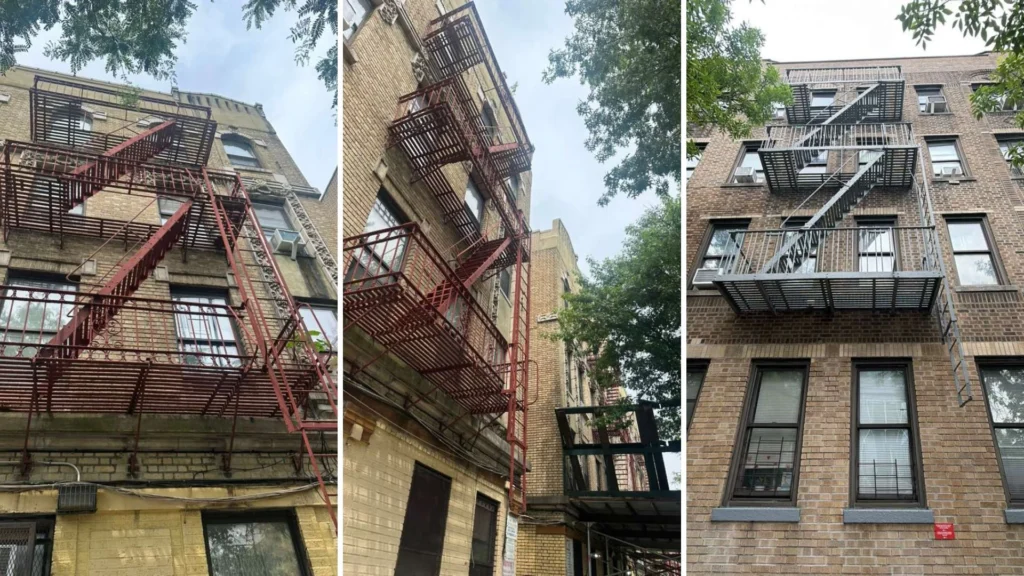
In most co-ops, the fire escape is a common element. That puts responsibility on the board, separate from individual shareholders. We keep the structure maintained well enough to pass a municipal inspection, and we keep inspection dates, repair history, and your COI on file, ready for your board or shareholder meeting.
If you manage multiple properties, we run the same standard across the whole portfolio. One inspection schedule. One point of contact. One set of records, no matter which town or municipality is enforcing.
Fire Escape Painting Westchester has spent 22 years working directly with Westchester buildings and municipal building departments, clearing real violations on real structures. We’re a licensed Westchester County Home Improvement Contractor, fully insured, and every repair carries a workmanship warranty.
We’re contractors who know this code cold. How your specific municipality will rule on your building is a conversation for your local code office. What we handle is getting the structure into the condition it needs to pass inspection.
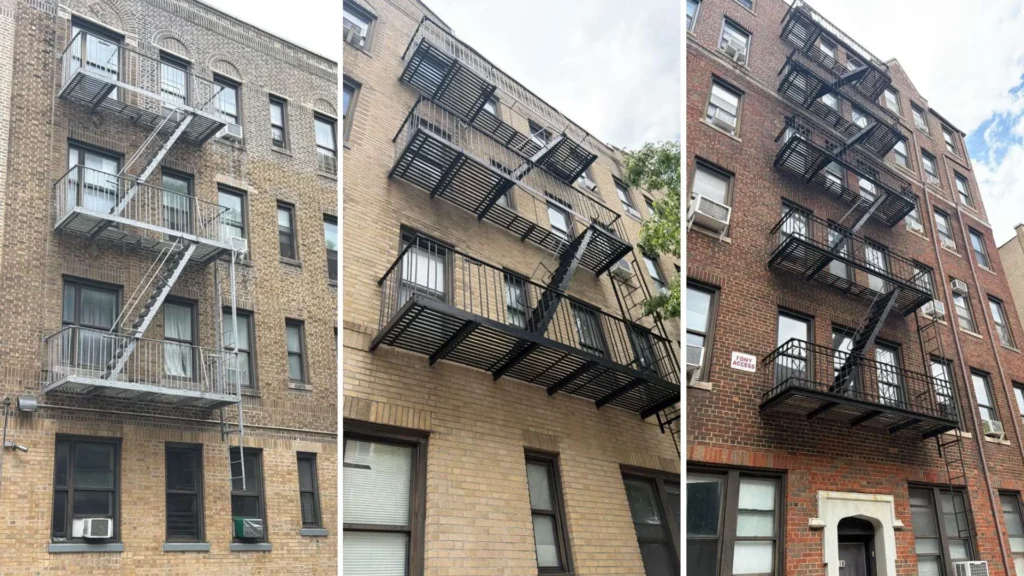
Whether there’s a notice on file or you’re just checking ahead of one, the fastest way to know where you stand is an inspection. Contact Fire Escape Painting Westchester at (914) 266-1401 or request a compliance inspection.
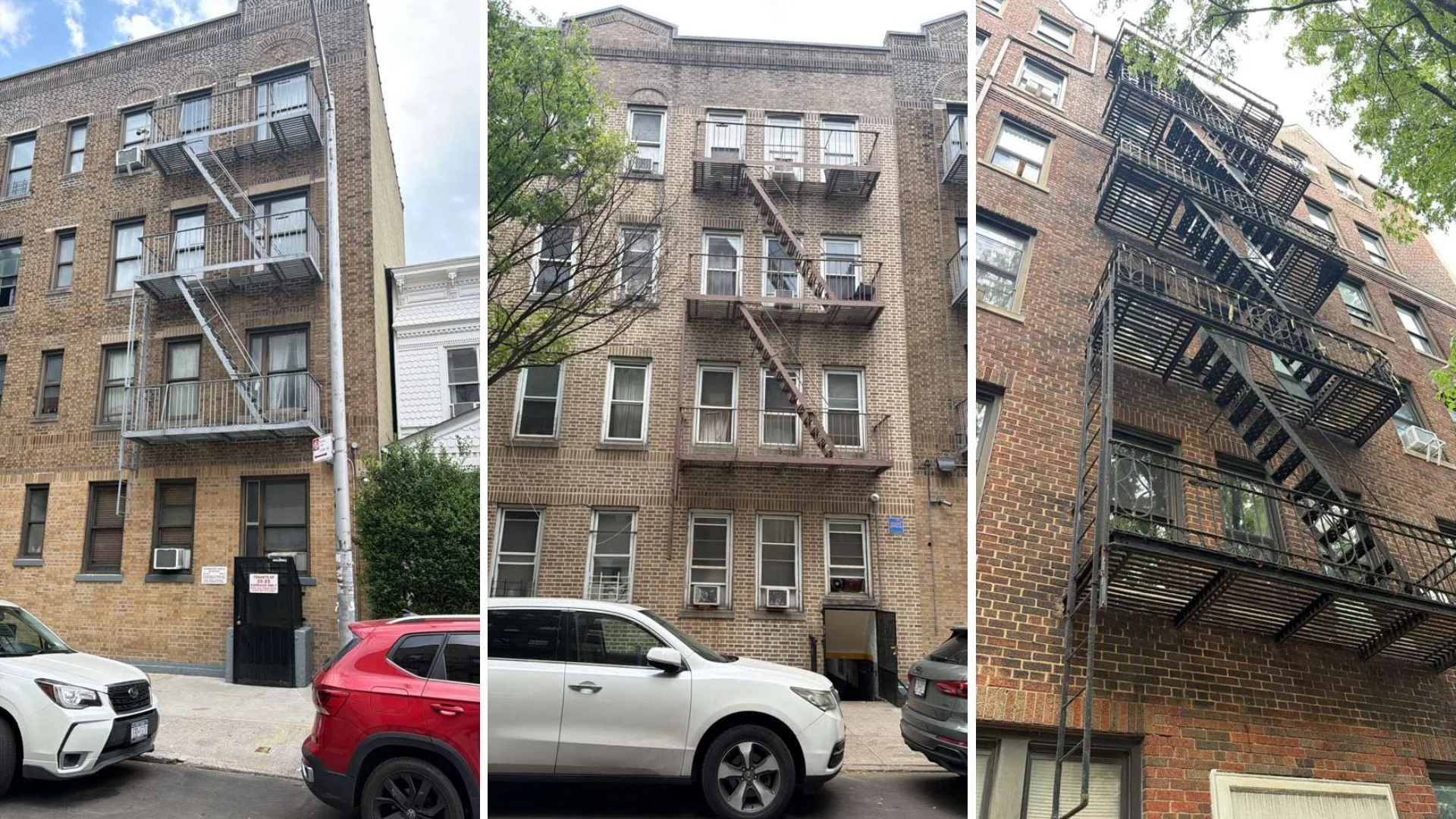
We start with an inspection rather than a guess. Boards that jump straight to repairs often fix the wrong thing, or pay for work the code doesn't require yet. An inspection is what turns a guess into a scope: structural condition measured against the Multiple Residence Law standard, not assumed from a photo or a phone call.
Most Westchester multifamily buildings are governed by the Multiple Residence Law and the Property Maintenance Code of New York State. Because occupancy and building type matter, we confirm the applicable requirements before recommending any work.
department and fire marshal. NYC's Department of Buildings, Local Law 11 facade inspections, and Environmental Control Board process apply only inside city limits.
It can. Surface rust caught early is simply a maintenance issue. Left untreated until it becomes visible deterioration, it crosses the line the Property Maintenance Code sets for structural soundness and good repair, and a code officer can issue a notice of violation.
Outside New York City, fire escape maintenance is governed by the Multiple Residence Law and the Property Maintenance Code of New York State §304.9. These require the structure to be kept structurally sound, properly anchored, and free of rust through periodic weather coating. The Fire Code of New York State covers egress and safety.
Each city, town, or village runs its own building department and code enforcement office. There's no single countywide agency the way NYC has the DOB. Depending on the municipality, a local fire marshal handles egress and fire safety matters alongside code enforcement, or in place of it.
The code requires rust free, good repair through periodic weather coating. It doesn't set a fixed interval like every three years. It depends on exposure and the condition of the last coating job, which is why we inspect first. Book a compliance inspection if you need that answered, or go straight to fire escape painting done to code if the scope's already clear.