
Welding, rust repair, loose-step and structural fixes for co-ops, apartment buildings, and commercial properties across Westchester County.
A rusted-through step, or a fire escape pulling away from the wall, isn’t a cosmetic problem. It’s a structural one. And in Westchester County, that puts you under the Multiple Residence Law and the Property Maintenance Code of New York State, not NYC’s rules. We repair, weld, and rebuild fire escapes across the county, from one corroded stringer to a full structural rebuild, and we work from the code that actually applies to your building.
From a single failing weld to a full structural rebuild, here’s the range of work we take on.
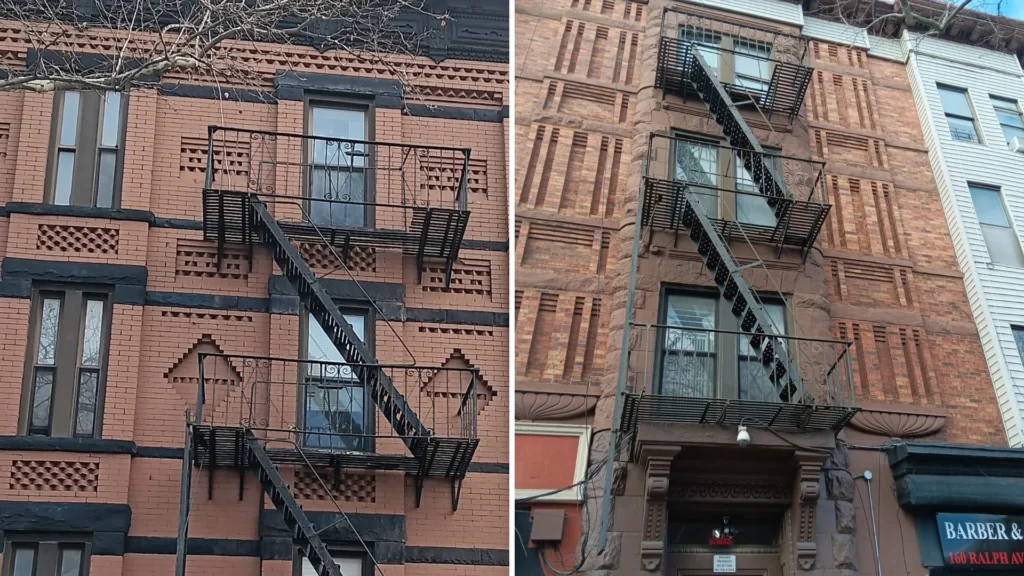
Cracked welds, corroded sections, and failing joints get cut out and replaced with new steel, welded to hold real load, not patched over.
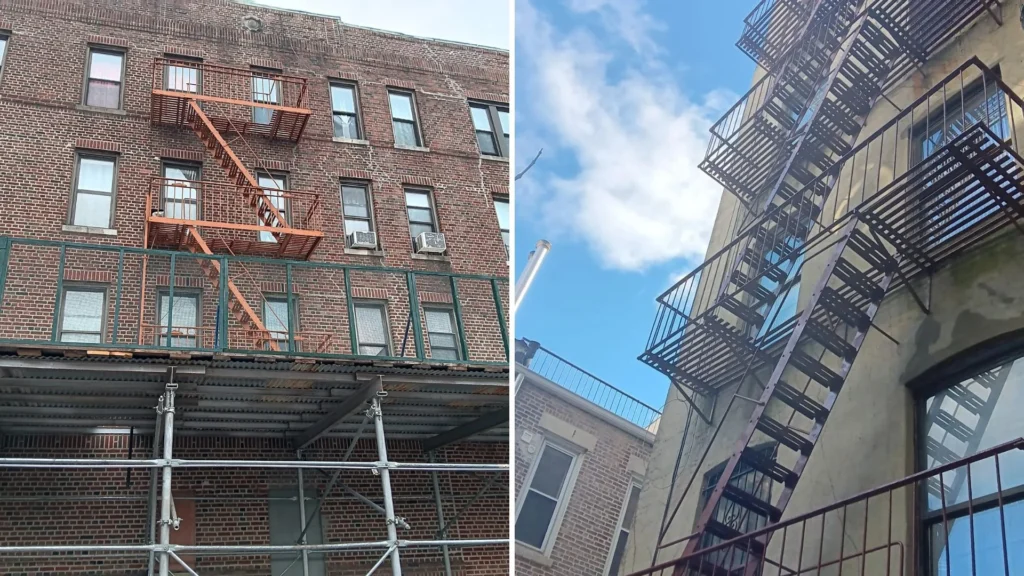
Surface rust is one thing. Section loss, where the metal has actually thinned or eaten through, is another, and it’s what determines whether a piece gets repaired or replaced.
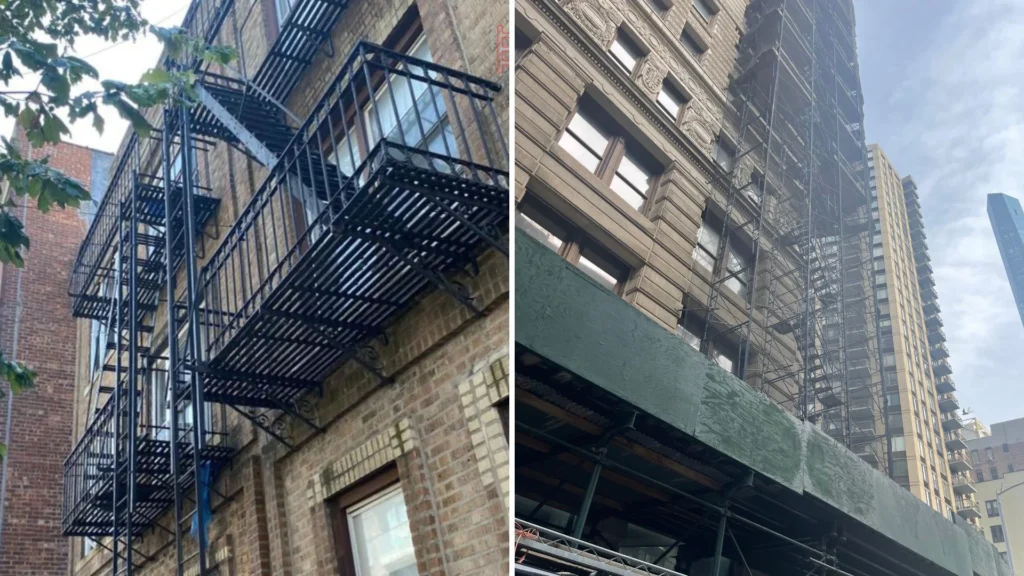
A wobbly step or a railing pulled free of its anchor point is usually the first visible sign of a bigger attachment problem underneath.
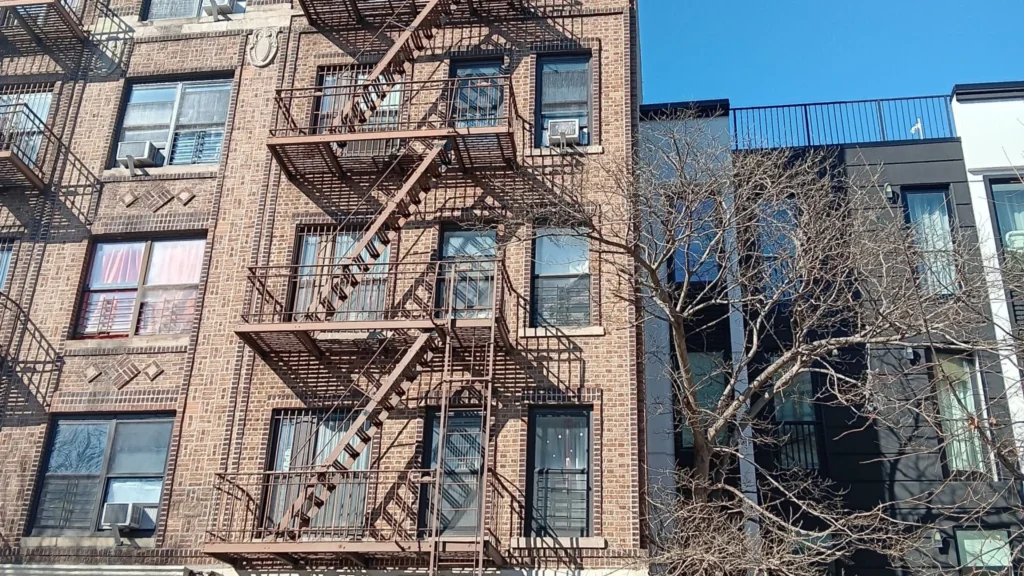
Some fire escapes need one bad section fixed. Others have deteriorated enough across the whole structure that a full restoration makes more sense than chasing individual repairs year after year.
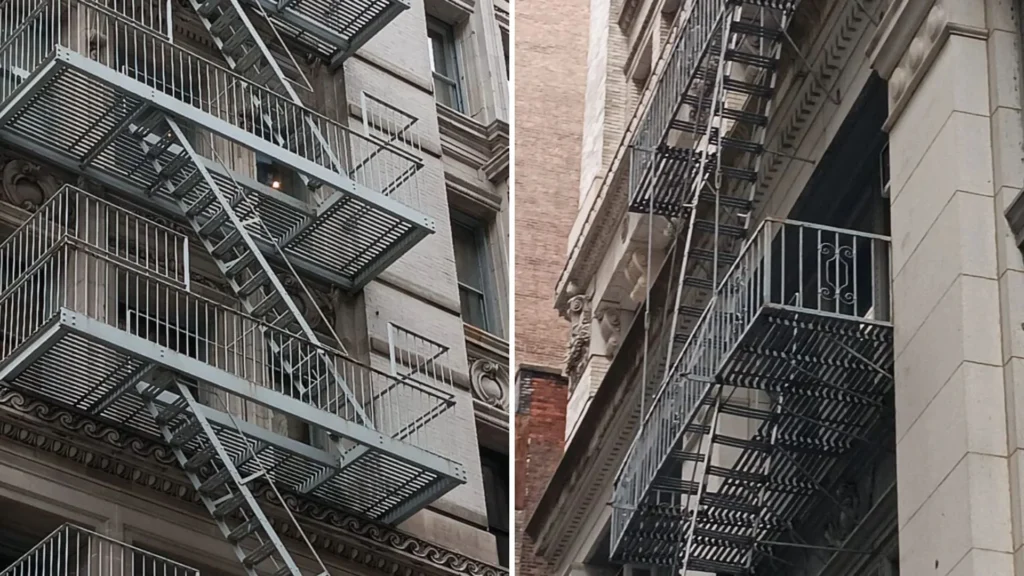
If the structure has lost too much steel to safely repair, we’ll say so directly and walk you through what replacement involves.
Most fire escapes give you warning before they become a real problem. Here’s what to look for.
Surface rust you can wipe away is normal wear. Flaking metal, or a spot where you can see daylight through the steel, is not.
Any movement where there shouldn't be movement means the attachment point has already started to fail.
One of the clearest signs of a real structural problem, not something to wait on.
Drop ladders and counterbalance ladders need to move freely. If yours doesn't, it won't work in an actual emergency.
If a fire marshal or code enforcement officer has already cited your fire escape, the clock on fixing it is already running.
A rusty fire escape isn’t automatically dangerous. Ignoring the signs above is how a minor repair turns into a structural one.
This is the question that actually matters, and it deserves an honest answer, not an upsell.
If the corrosion is isolated to specific sections and the rest of the structure is sound, we replace or weld those sections and the fire escape goes back into good repair.
Once section loss spreads across the structure, or multiple attachment points have failed, patching individual spots stops being cost-effective and starts being a temporary fix on a structure that needs more.
We look at the extent of corrosion, the condition of every attachment point, and whether the remaining steel can still carry the load it's supposed to. If a structure raises real engineering questions, we'll tell you to bring in a licensed engineer before anything else happens.
Repair usually costs less upfront than replacement. But a fire escape that needs replacing and only gets patched tends to cost more over time, in repeat repairs and in risk.
Here’s exactly what happens once you call us, from first look to final documentation.
Most repair jobs move quickly, and we can usually work around an occupied building without disrupting residents. Exact timeline depends on the scope of the repair itself.
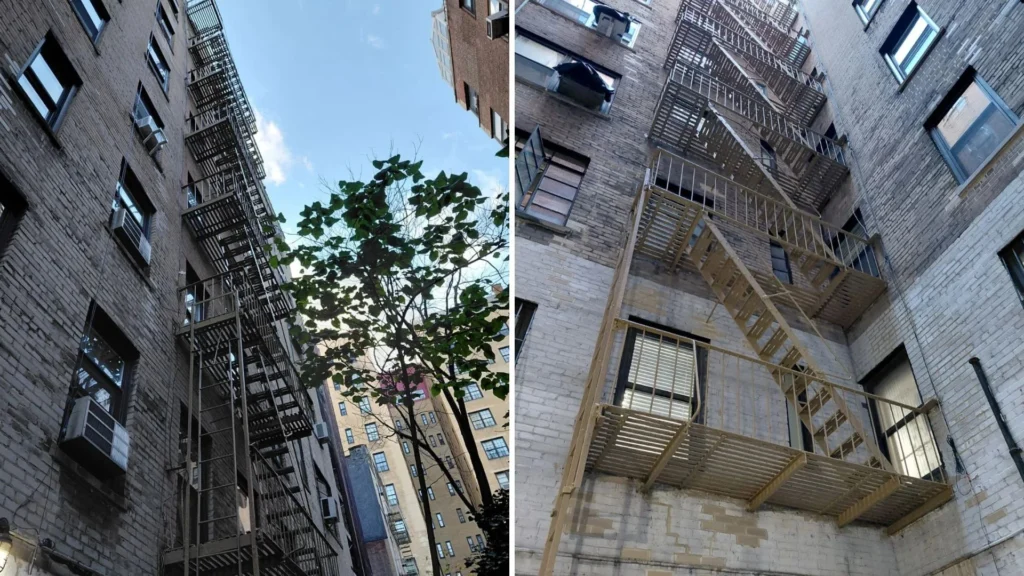
Westchester fire escapes fall under the Multiple Residence Law and the Property Maintenance Code of New York State, §304.9, which requires fire escapes to be kept in good repair and structurally sound, with exposed metal protected from rust by periodic application of weather-coating materials, such as paint.
This isn’t the framework New York City uses. Westchester municipalities enforce their own code through their local building department and fire marshal: Yonkers, New Rochelle, Mount Vernon, White Plains, and every other city and village in the county handle enforcement locally.
If your fire escape already failed an inspection or has an open violation, the notice typically cites a specific condition, loose steps, corrosion, a failed weld. We repair to that exact condition and provide documentation your building department can review.
We can’t guarantee a repair passes a future inspection. That call belongs to the inspector. But we build every repair to bring the structure back into good, code-compliant condition.
We provide a certificate of insurance and documentation your board can keep on file, and we coordinate scheduling around your building's requirements.
Building-wide repair work, tenant or shareholder notice, and minimal disruption to residents are part of the job, not an afterthought.
From a single-family building to a full commercial property, the same structural standard applies either way.
We’re licensed and insured to work throughout Westchester County, and we carry general liability and workers’ compensation coverage, with a certificate of insurance available for any board or management company that needs one. Our welders hold certified welding qualifications, and our crews work under OSHA safety practices on every job.
We’ve spent 22 years repairing fire escapes across Westchester.
Every repair comes with a workmanship warranty, and we can show before-and-after documentation from real jobs, not stock photos.
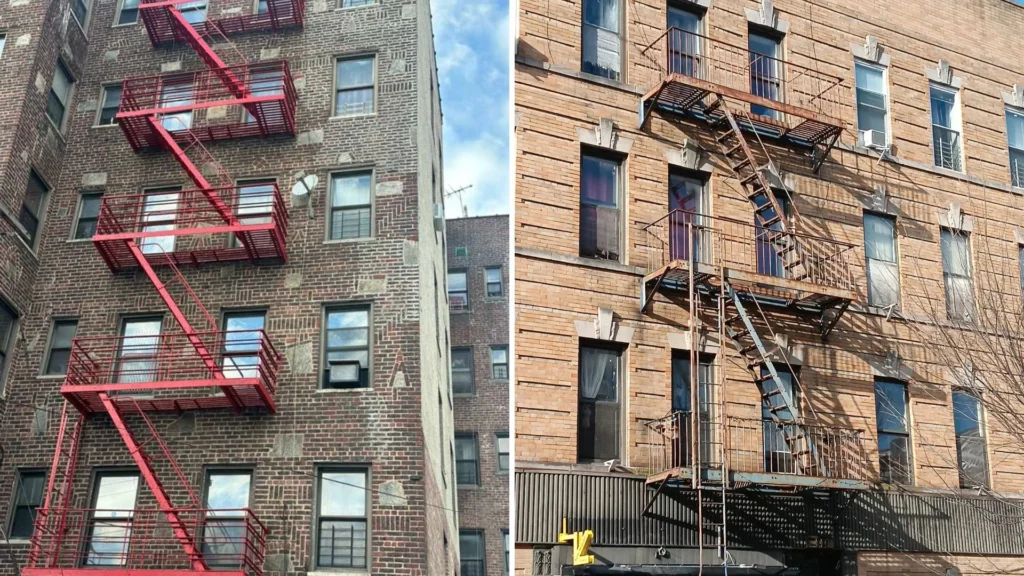
A fire escape that’s already showing rust, a cracked weld, or a loose step won’t fix itself, and every season it sits unrepaired is a season closer to a bigger job. Call (917) 203-4237, or request a free estimate. We’ll assess the structure honestly, tell you whether it needs a repair or a replacement, and handle the work and the documentation either way.
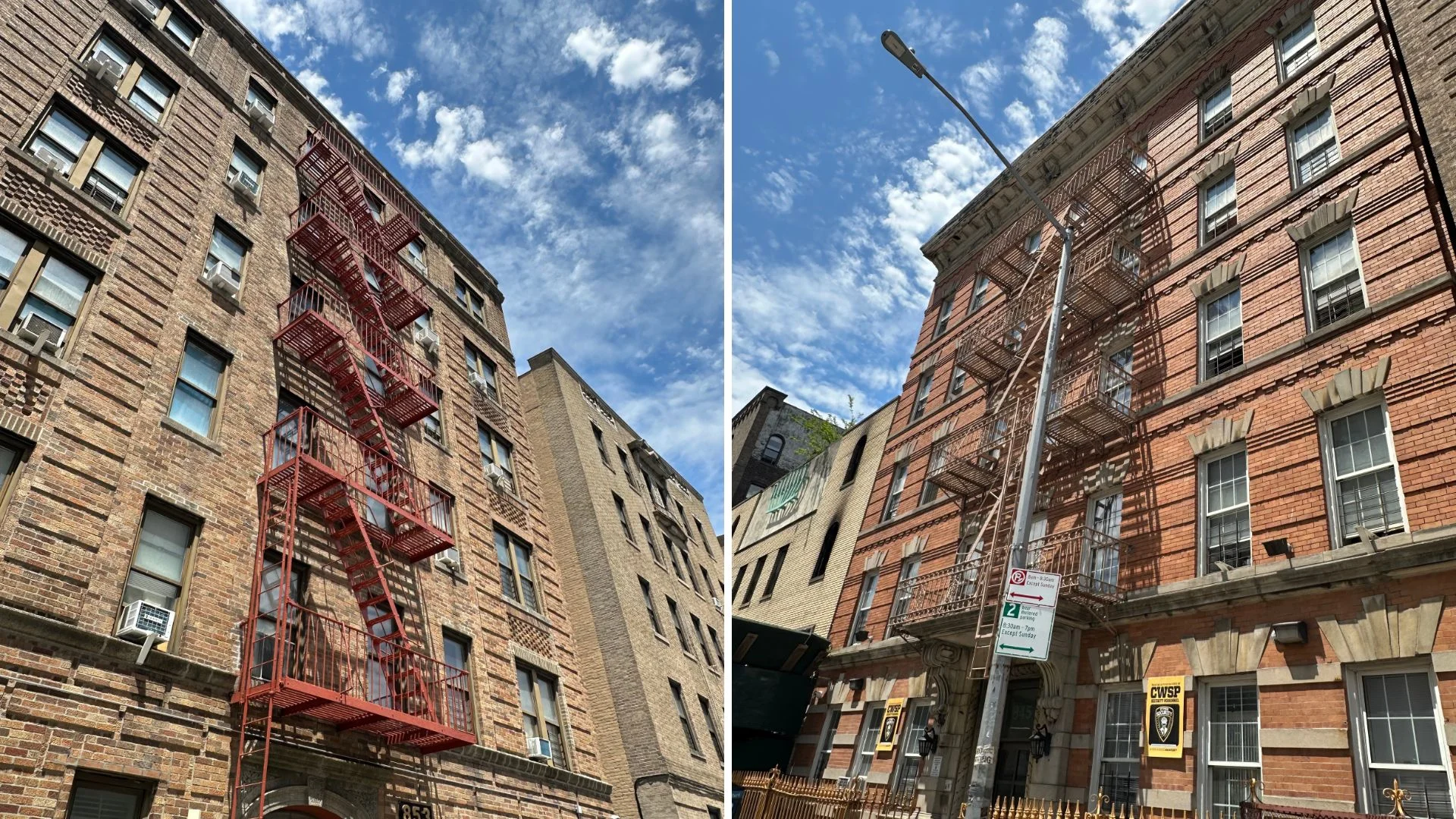
Yes. Under Property Maintenance Code of New York State §304.9, fire escapes must be kept structurally sound and protected from rust by periodic application of weather-coating materials, such as paint. Visible corrosion left unaddressed is treated as a maintenance violation, not just a cosmetic issue.
Often, yes. Surface rust and isolated corrosion typically get repaired directly. Once section loss spreads across the structure or affects multiple attachment points, replacement usually makes more sense than ongoing patch repairs.
Cost depends on the extent of the damage, how much steel needs replacing, and whether welding or full section replacement is required. We give you a firm estimate after assessing the actual structure, not before.
Both, depending on what the structure needs. We weld and replace individual sections where repair makes sense, and recommend full replacement only when the structure has deteriorated beyond what repair can safely address.
Usually, yes. Most repair work doesn't require residents to leave the building, and we coordinate scheduling with your property manager to keep disruption minimal.
We repair to the condition cited in your inspection or violation notice and provide documentation of the completed work. The final pass-or-fail decision belongs to the inspector, not to us.